
At 20 years old, Alexander the Great began his campaign that led to conquering the great Persian empire which was the largest empire in the ancient world at the time, (roughly equivalent to the Roman or Han Chinese dynasty).
The story of Alexander was an incredible and pivotal moment in history that led to the rise and dominance of Greece, and then the subsequent Roman Empire, and western civilisation, and it contains an abundance of lessons and wisdom that can be useful today.
Here are the biggest lessons I learnt
Education
Leadership
Vision & Focus
The Persian empire before, and Alexander’s route of invasion.
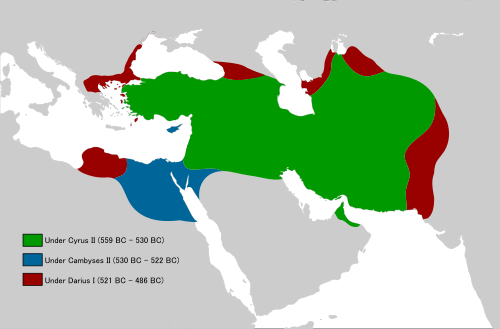
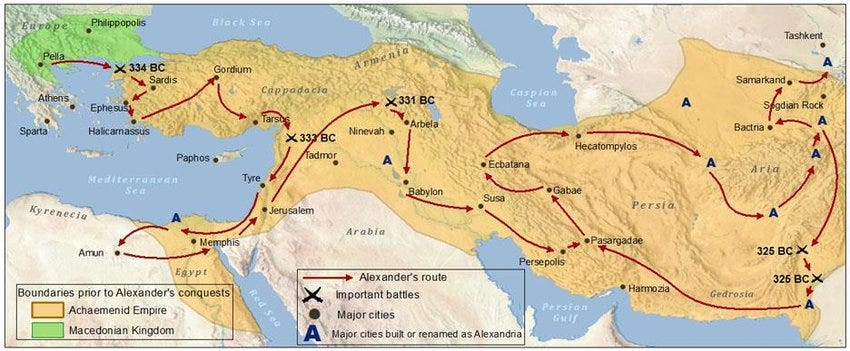
While it is an incredible story of bravery, focus, vision, heroism and leadership, on the other hand, while there were many hairy moments, something that surprised me was the seeming ease with which he conquered such the territory. It seems that once Alexander’s dominance was established there was an inevitability in fall of the whole territory. The structure, and systems of the Persian empire, could then be taken over by another power.
But why did he have such an advantage?
On the one hand he had an obvious and clear military advantage. This is something that can be owed more to his father Philip who innovated and built the Macedonian war machine after learning from the best of the greek armies of Thebes and Athens.
Established a full-time professional army that could be more specialised than the other part-time states.
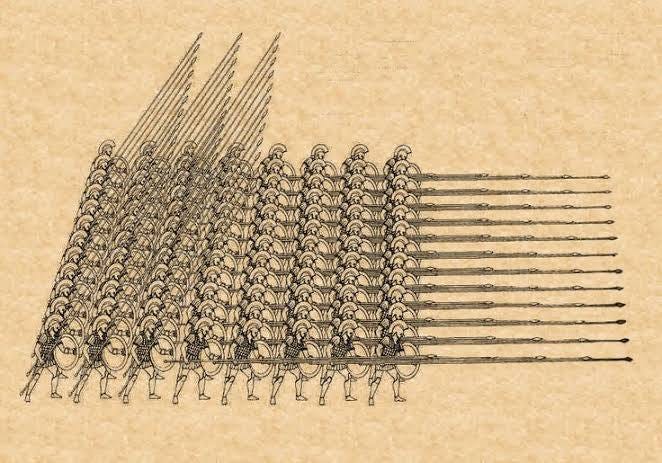
Developed the Phalanx formation, with interlocking shields and long sarissas
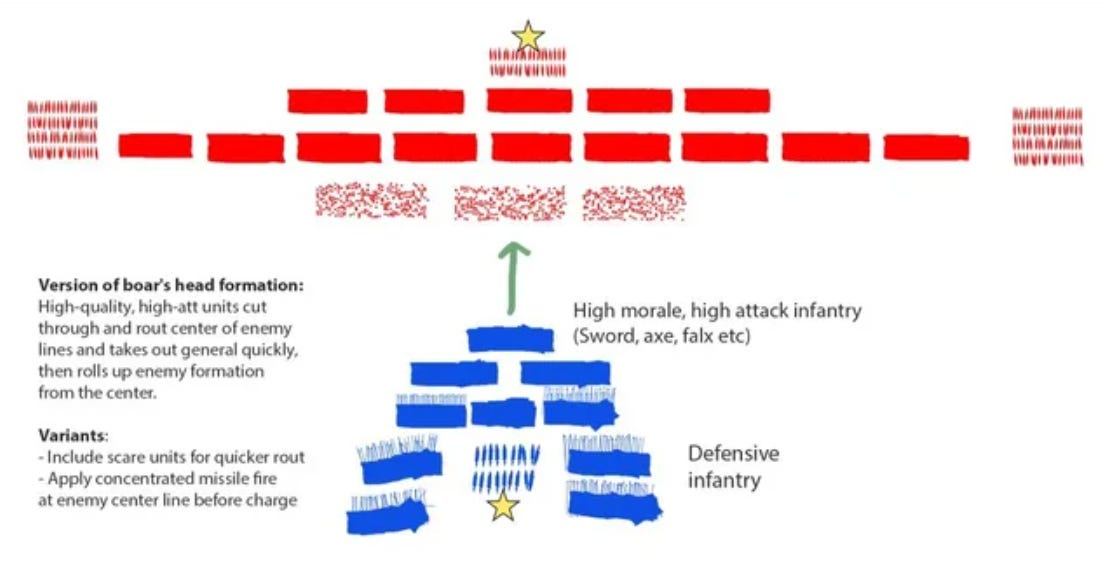
Developed the Wedge Shaped Cavalry formation which focused on the centre to puncture enemy lines.
Emphasised mobility by having troops carry their own supplies, reducing the need for animals and enabling year round campaigns.
One of the most decisive factors for Alexander’s superiority was his incredible education which enabled him to out-think anyone in the world. This is also thanks to his father. From a young age he had personal tutoring by one of the greatest thinkers of the world - Aristotle, who was also Macedonian. Alexander received 1 on 1 tutoring in Philosophy, ethics, medicine, logic, politics, rhetoric, persuasion, scientific inquiry frameworks, history, battles, and carried a copy of Homer’s Illiad annoted by Aristotle with him, with the core lessons that the truly great man seeks immortality through deeds. He learnt civilisational design.
This education gave him the mental superiority that was outmatched by anyone in the world, and ability to out think his opponents, lead an army, overcome obstacles and then understand systems and civilisation to build cities and manage an empire.
‘Our enemies are Medes and Persians, men who for centuries have lived soft and luxurious lives; we of Macedon for generations past have been trained in the hard school of danger and war. Above all, we are free men, and they are slaves. There are Greek troops, to be sure, in Persian service but how different is their cause from ours! They will be fighting for pay and not much of it at that; we, on the contrary, shall fight for Greece, and our hearts will be in it.’
It also fully taught him to focus on his higher goal and being free from distractions that many of the great kings.
Alexander also had an enormous self belief and conviction in himself. This is thanks his education and upbringing, constantly being inspired and prepared to lead an empire. That led to his ability to see a clear vision and self belief was necessary for him to carry out great deeds like going first over a fortress, founding cities in his name, and share propaganda about himself.
His ability to lead from the front, when necessary, in one battle outflanking the Persian army to go straight for the Persian king with his small elite force, showed his conviction to his army and helped him win the mental battle against the Persian leader who looked in his eyes, and after seeing the ferocity in his eyes, fled the battlefield. It was there that the Persian empire was lost.
The story of Alexander is one that helps any person become more ambitious. If he was able to do all this, it helps put your life into perspective.
To me the story of Alexander is more about the importance and value in education. I have often wondered - if I could go to teach my 12 or 13 year old me, all the wisdom and lessons that I know now that I have learnt from trial and error, how effective that could be, and what are some of the things I be able to accomplish in my twenties. I say this not because of regret, but to consider how we can improve our education system and how valuable it can be. Not to create conquerors but leaders. One of the core challenges of our civilisation is that knowledge, experience is lost and has to be relearnt every generation. Creating great men and leaders such as Alexander is something that happens rarely and often more by the chance of some foresight and planning within a family.
While education is so valuable, something that can help a nation conquer another, lead industries, and solve any problem, teaching is something that is often undervalued by our current system, being some of the lowest paid professions. Part of the reason it is undervalued is that our economic system has no way of monetising it. Our economic system and GDP measures the capture of value, it has no way of measuring future value or recognising the lost potential. The most powerful force in civilisation - compounding human capability - remains undervalued and unmeasured. While we seek to maximise profit, encourage debt-fueled consumption. We have to find a way to set the vision, measure differently, or override our current incentives so the value of education is recognised on a wider scale.
What would such an education system look like? And can it be done at scale? The key point is that the content and knowledge is abundantly available now that we have the internet. We are not limited by our ability to hire scribes to write books. We have more tools than Alexander ever dreamed of: internet, AI, instant access to global knowledge.
Such an education system would have a powerful modern core curriculum combining the essential lessons give self-belief and conviction and have effective application and personalisation of this knowledge to each person. This is all now possible now that that we have AI, digital systems and the internet so we are not limited by our ability to be in a certain location to access excellent tutors. We are now in an age where there are tools, content and systems are available.
The story of Alexander, is one where one man’s foresight to provide elite education led to the rise of Greece and the birth of western civilisation. Such a lesson should not be down to chance. How we choose to educate could make the difference between a falling power, loss of wealth, civilisational decay into dark ages, or a rising one, if every child could have an Alexander level education, where knowledge compounds every generation. A civilisational unlock providing enormous advantage for a nation or bring in a new renaissance and golden age.