
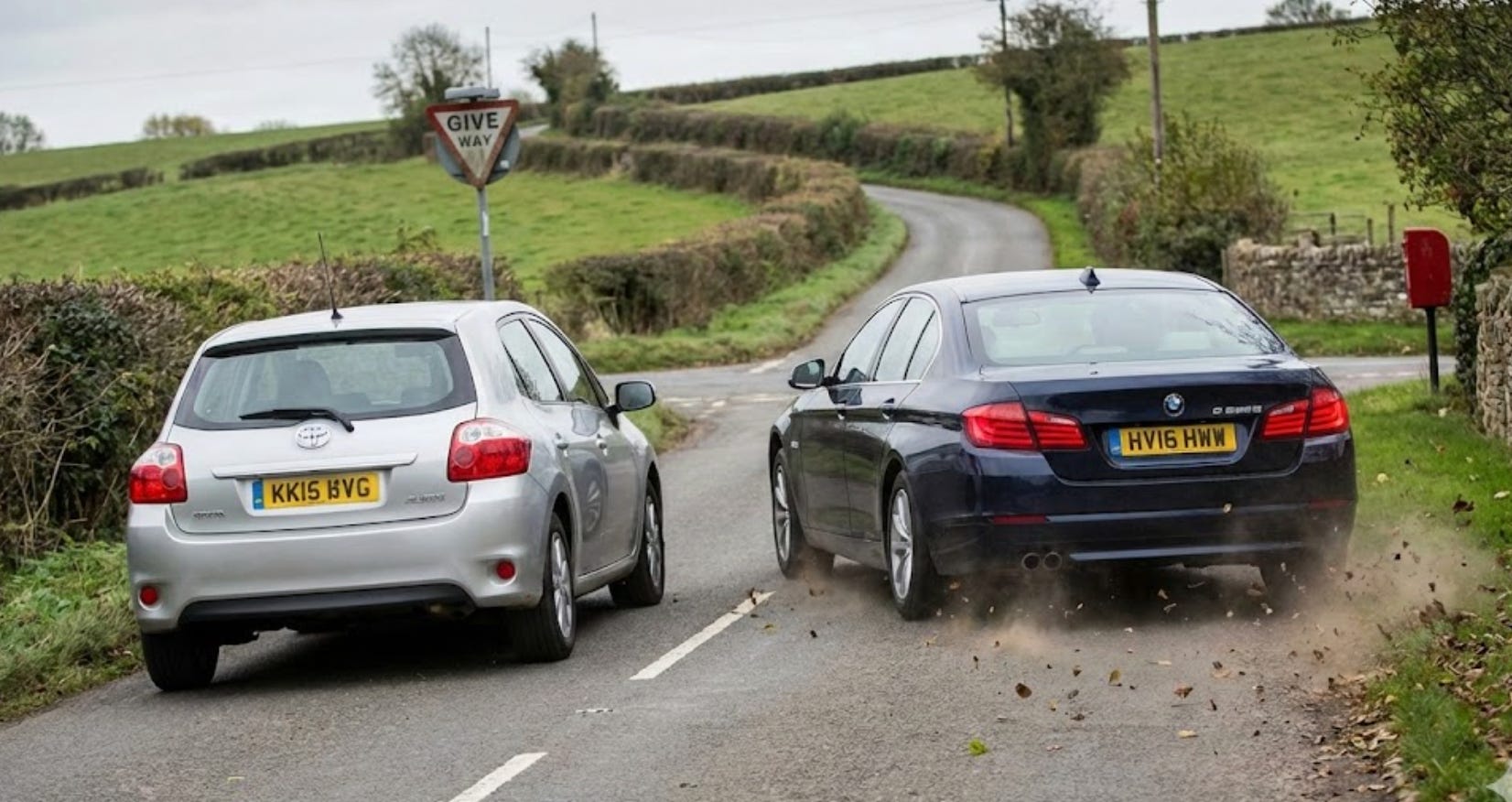
‘Any damn fool can overtake going downhill.’ My grandfather said as a car revved past us on a country road.
Today, this describes our economy.
We have been taught that GDP growth is the ultimate scoreboard of a successful economy.
GDP is like a speedometer on a car. It is a measure of how many transactions are happening, but it doesn’t care about the direction or sustainability of the engine.
Speed is what matters.
However, if our economic transactions are happening faster, but we are not upgrading our economic engine - infrastructure, and human capital, and birth rates are falling, debt is rising, and we are burning all our fuel, then our economy isn’t getting stronger, it’s headed toward a cliff.
The Spanish Trap: 1790 vs. 2026
In the late 1700s, Spain was the world’s undisputed superpower. They had accumulated more “resources” (gold and silver) than any nation in history. They were rich beyond imagination.
But they failed to develop local industry. What’s the point? They didn’t need to; they could just buy whatever they wanted.
When the silver stopped flowing, Spain collapsed. They were overtaken by the United Kingdom - a nation with a better philosophy.
In 1776 Adam Smith wrote the Wealth of Nations. The British realized that wealth doesn’t come from accumulation, it comes from Productive Capacity. They became the “workshop of the world” because they invested in the ability of their people to produce.
The GDP Delusion
In 1934, following the great depression, the U.S. adopted a new metric: GDP. It was designed to measure activity to get the economy flowing again. It was never meant to be the target, yet over time, it has become our chief economic goal, and a “master incentive” that drives our economy.
The problem? GDP is a misguided metric. It doesn’t differentiate between Value Creation and Economic Liquidation. Our obsession with GDP distorts our economy.
If you have a car crash, GDP goes up.
If you have an oil spill, GDP goes up.
If the cost of housing, healthcare, and education doubles, GDP goes up.
By chasing GDP, we have incentivized Extractive Economics. The flow of money is more important than our stock. And we don’t even consider the value of humans in our economic model. We are liquidating our most important asset - the Human Being - (the engine) to keep the “transactional volume” high on a spreadsheet. When human beings should be the center and most important part of an economy.
The “Downhill” Economy
When a home doubles in price without a single brick being added, GDP rises, but the nation gets poorer. We have mistaken the rising cost - speed for the creation of wealth.
Look at the state of the world in 2026:
Birth rates are in a global freefall.
Debt is at record highs.
Productivity is stagnant.
And yet, the “experts” point to GDP growth and tell us we’re doing fine.
This is the definition of “overtaking going downhill.” We have financialized the basic infrastructure of life - housing and health - turning them into “extractive assets” that eat away at the individual’s surplus.
The Solution: Surplus Economics
An economy is not better because of the level of transactions; it is better because of the capacity and ability of its people.
We need a new philosophy:
The Surplus.
Real wealth is not the volume of money moving through a system. Real wealth is the capacity of the people
Individual Surplus - what a person has left over in terms of time, health, and capital after their foundation is secured, and their ability to create to live, and reproduce.
An economy is not stronger because it is going faster. It is stronger because it has a better engine.
Sometimes you need to take a pitstop to slow down and rebuild the engine, and to build a better economy we need to see GDP as an indicator not a goal.
By continually pushing an economy to its limit, by measuring in the wrong way, we are overtaking going downhill.
It’s time to stop looking at the speedometer, and start building a better engine.