
The UK higher education sector faces a severe financial crisis, with over 40% of institutions reporting operational deficits.
Driven by years of frozen domestic tuition fees, inflation-driven costs, and shrinking international student numbers due to stricter visa rules, dozens of universities are turning to job cuts, course closures, and potential mergers to avoid insolvency.
The discussion is shallow, the problems are deeper.

The underlying reason for the crisis is that costs are rising, but tuition fees have been frozen, so universities have increasingly relied on international students, now this has been limited, they have no where to go.
The problem is that they can’t increase tuition fees for domestic students - they cannot afford to fund the universities directly from general taxation, they cannot afford the long-term balance sheet damage of underwriting massive fee hikes, and they cannot afford the political fallout of hitting voters with the true bill.
At the heart of it lies the manifestation of a deeper economic contradiction we have:
The contradiction is that housing can’t be both a good investment as a pension, increasing each year beyond wages, and affordable for young people at the same time.
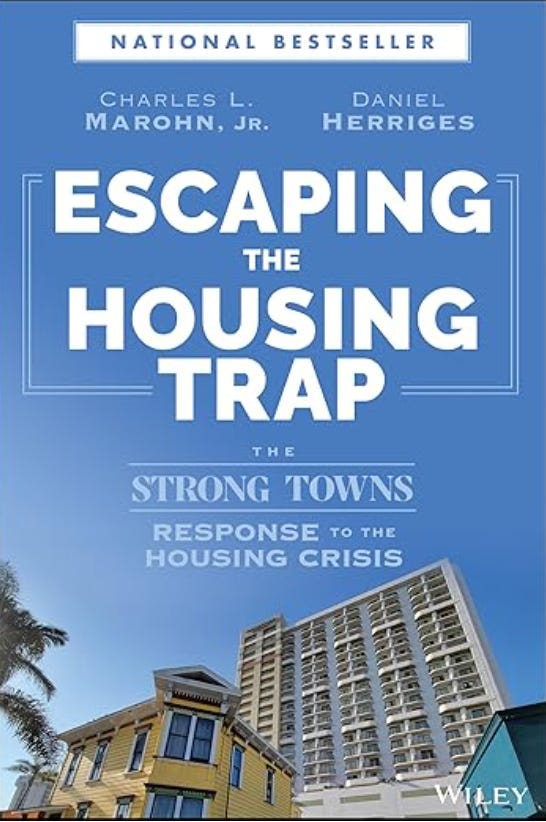
This was originally written for the US, but the UK has it much worse. Much more of the money is in housing than in US.
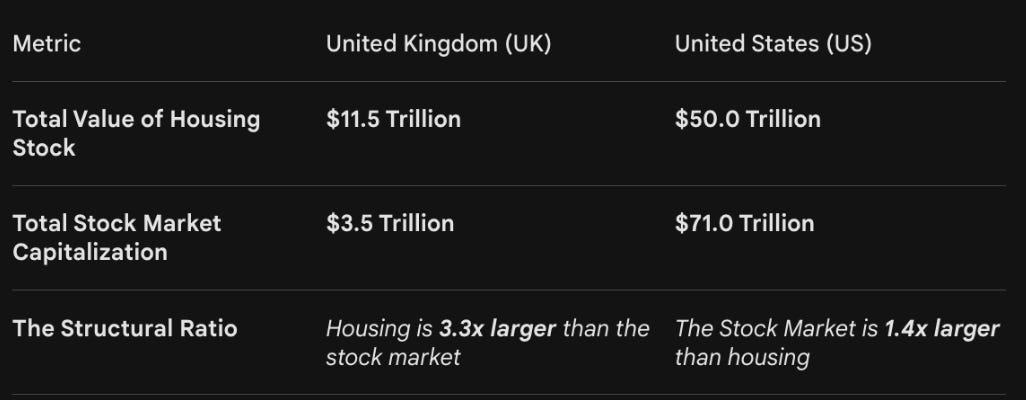
Housing acts as a massive tax on the productive parts of the economy.
The reason that we have reached this stalemate is that GDP is a master incentive and it incentivises short term metrics rather than long term growth.
Consumption and rent seeking rather than value creation.
GDP acts as the master economic incentive - and there is terrifying political hurdle of having to accept a short-term GDP drop to fix it.
If we build more houses and housing prices fall, then GDP falls, and pensions will decrease which is bad for the economy and wealth effect, and for voters.
If the UK could put more into building more houses, costs for universities would fall, but we would need to solve the other effect of pensions and short term GDP growth.
So we are stuck in between a rock and a hard place.
But the solution is to solve it in the long term and gradually rather than suddenly. By gradually developing more incentives for the stock market, value creation and lower housing.