
For Global Admissions online platform I’ve had to make some pricing decisions. What services at what price point make the most sense?
There are lessons to learn from this in how university is priced and funded.
If we have perfect equality and equal willingness to pay then one standard price for everyone works best. But we know we don’t have perfect equality - especially in global markets.
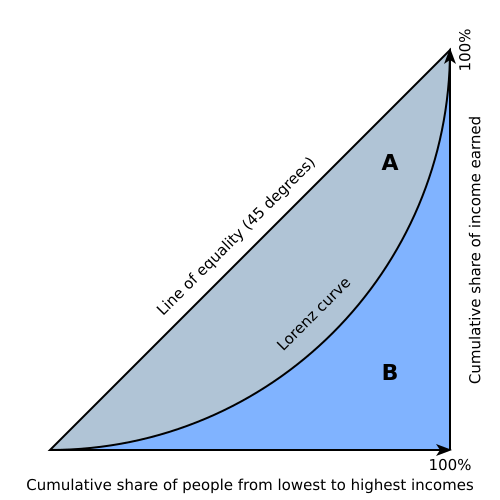
In digital platforms - it makes more sense to segment the market - and to offer high value services to the small number who can pay a lot, and free, or heavily subsidised low cost services to the majority - that is because the market still benefits from the network effects, and captures the value in the high price point.
Charging a large number of lower priced customers small amounts is substantially harder than charging a small number of high budget students high amounts. Expectations are much higher - so it’s almost better and easier to not charge them at all.
How much should students pay for university tuition fees?
I think there are parallels in university pricing, and in my review of why UK universities are failing
Why UK Universities are Failing
In the 2024-25 accounts, one British university posted an operating deficit of nearly sixty million pounds. Coventry - not a household name in the way Oxford is, but a large, striving, internationally-minded institution of the sort that does much of the actual work of British higher education.
The university model broke in many countries when university attendance increased to over 50% and new funding models were needed.
Choosing one fixed price for all students is not optimal pricing for the market because excludes those below that, and dis-prorportionally costs the middle - while leaving revenue on the table from higher earners.
One option is universities discriminating between those that can afford it and subsidising the others.
Or a university system divided into tiers with a higher private one with market prices, and a state subsidised university system.
But the difference between a tech platform and a modern university is that a platform can have near-zero marginal cost.
Therefore universities need to adapt the service for lower income students to offer near marginal lower cost, or find other ways to subsidise it - such as:
through offering substantially higher prices and services to wealthier students
creating a lower cost - delivery tier for lower income students
private companies that recruit covering part of the training costs
state subsidies to cover the added benefit that education gives to society
a mixture of the above
In my opinion I think that the state should be the overriding architect of the system and substantially subsidise it, while also allowing free-market systems to develop along side it that should have no limit on pricing.
And the entire cost base of providing education can be reduced drastically with new technology there are many ways of reducing costs. There should also be a development of new and free education systems that are available online that can educate at near zero-marginal cost. Even without the use of advanced technology - there are many great and successful leaders in history who received an incredible education by reading books. Abraham Lincoln is one remarkable example. While this is true for those with extraordinary drive, it’s still necessary to have an education system that creates environments for others to thrive.
With the state as the competent architect and subisier, and allowing a free market - this has the best of both worlds - it satisfies those who can’t afford it, while also allowing greater dynamism, diversity and innovation in the market. The only problem would be that greater fees and funding in private universities might drain the state sector - which is what, it can be argued, happens in the secondary school private sector market. The solution is not to restrict the market to make it worse, but to make the state sector more competent.
Which is the idea of the platform state.
The whole idea is how do you solve services that have some part infrastructure and some part private market economy? Much of the failure in democracies is to argue about less or more state involvement rather than involvement in what.
The state restricts the market but cannot build or architect the system - so you get the worst aspects of a market and a state.
Lack of central direction and strategy, and market forces unable to find equilbrium or innovate.
The Platform State

China has built roughly 45,000 kilometres of high-speed rail in about the time it has taken Britain to build 250 kilometres of HS2, at a cost approaching £50 billion.