
I’ve written before about the reasons birth rates are falling.

It’s easy to criticise, much harder to fix it. Here are the policies I advocate for:
Redesign the economic objective by having long term visions for how to build or design the economy based on the national advantages. For example, training all young people in technology skills, and making that more important than GDP growth. Fixing the housing market. Education and training the workforce, reducing debt. These are all going to negatively affect GDP now, but they are necessary. Scrapping GDP entirely as a measure of economic growth, or using it only as a very minor indicator. A balance sheet approach incorporating human capital would be much more valuable and planning for longer time horizons.
The political difficulties of this are many. Politicians need to master the levers of the digital age. Content, code, capital, and people. The content and code parts are where most leaders fall short. They are not in control of the media. I don’t mean this in the sense of authoritarianism, but in the form of being able to communicate ideas, and setting agendas, and acting as leaders. In many ways, the media is leading the agenda, and most politicians have not yet mastered the modern forms of media. This is often a very different skill to execution, and so it may be an advantage to separate executors (internal operators), and communicators (influencers), because they are very different skill sets, and it is rare to find them in one person. It is essential for a leader to operate to be able to drive forward and make the case for unpopular ideas, otherwise they are not leading.
Competent leadership is far more important now than before. The rate of change and needs are much more challenging than ever before, and small actions can have massive consequences. Our selection process is quite flawed. It is as if we criticise every person, and pay them peanuts, and then criticise them more. If we are seeking to recruit the best talent, we should set a competitive market driven salary, and actively recruit the best talent from industry. This is essential to make the short term unpopular policies that we need.
Recognise economics as a flawed discipline. It is inherently interdisciplinary, and negatively influenced by politics. It is always going to a simplified map of reality, and in some sense wrong, the question is to make it less wrong.
To fix the housing market, we need to free up planning, build more houses, develop out of town pilot zones, and give preferential policies for young people to buy houses with less fees, even subsidised housing for young families. Tax free income for young people up to $500,000 USD, like they are trialing in Canada, is one such policy that can help people to get a start in life and build momentum. I don’t really understand why housing is not being built, but my sense is that it is a political and economic issue. Political because it is unpopular for those who may have houses built near them, and their house prices may fall, and economically because they will feel less wealth. These are not valid. The value increase of a house should not be captured by a private individual, the house price rise is capturing the value that is created by the community, market and government policy and this distortion is messing up our economy.
There could also be a tax on people who have empty housing, or even empty rooms. If housing is infrastructure, and we are limiting how much we can grow, this is the core civilisational bottleneck. We should seek to put this capacity to use as best we can.
We should also seek to make the other infrastructure much cheaper and better. Education, energy, and healthcare. The price can be lowered with subsidies, generating competition by opening markets. The UK energy market is another example of huge market failure where companies own infrastructure that is core to our nation, and is profiting off of suffering. Record high prices, record high shareholder profits. It is a regulatory failure that is an example of monetising the consumer surplus, inability to invest in supply, extracting value out of the economy. Decouple electricity from energy prices so prices can fall, with longer term contracts. Windfall tax with reinvestment mandates. National energy efficiency can be a core mission for the government. Healthcare and student loans are other examples.
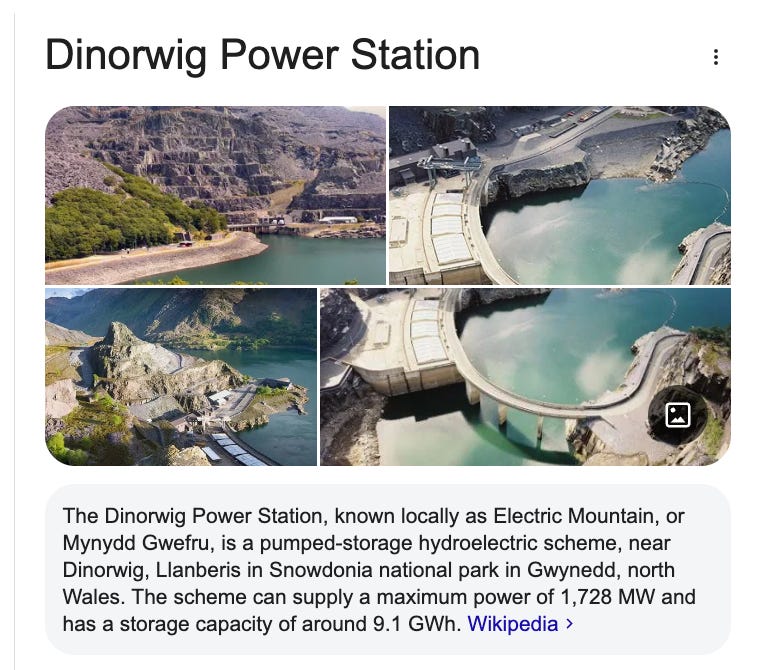
Some of the problems of the UK energy market for example is the rapid increase in prices during winter at peak times, and inability to store energy from the cheaper months. Peak prices during the winter during peak times, are because everyone is accessing the same limited global energy. Building more storage facilities such as hydro projects and other methods, so cheaper energy during winter can be stored can help lower costs, as well as investing in excess capacity such as nuclear and other forms. Taking control of the market and lowering prices of infrastructure and the platform would have a very positive impact on the dynamic market economy
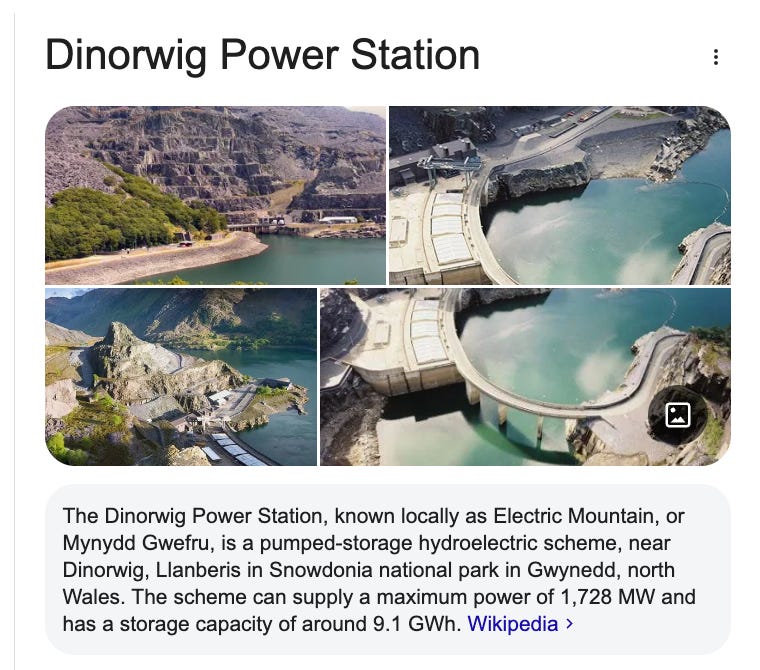
An example of the limited energy storage in UK
The other policies are to make the workforce better trained, teach them how to use leverage, and lower student debt, reduce time at university for some courses, and improve education which I also have many ideas about in other articles.