
Marc Andreessen recently posted that he never engages in introspection. People were quite surprised by that.
TLDR: Silicon Valley elites like Marc Andreessen can skip introspection because their world-class environment acts as an external mirror. But for the rest of us, introspection isn't a luxury - it’s the only feedback loop we have to build "wholeness-driven" ambition without needing a traumatic past to fuel our drive.
I think in many cases most people shouldn’t listen to the top leaders in a field. They have survivorship bias.
Marc Andreessen was obviously incredibly smart, and driven, founded an incredible company and was surrounded by talented people. He is at the epicenter of the software industry. His psychology obviously works for him.
It’s hard to know what factor luck - the right combination of drive, intelligence, ability and timing played in certain things happening.
If it aint broke - don’t fix it!
As the American saying goes.
But his success isn't proof that introspection is useless.
Before continuing this I’d like to differentiate and define
Introspection is the conscious examination of one’s own mental, emotional, and cognitive processes - essentially “looking inward” to understand your own thoughts, feelings, and motives.
Metacognition is commonly defined as “thinking about thinking” or awareness of one’s own cognitive processes.
I think thinking and ruminating on the past, going to therapy and trying to resolve past trauma’s can be a waste of time.
By dwelling on problems you can make them worse.
In order to solve problems you have to look forward to overcome the short term obstacles.
Eileen Gu talks about how metacognition and thinking and improving how you think is one of the most useful ways to improve.
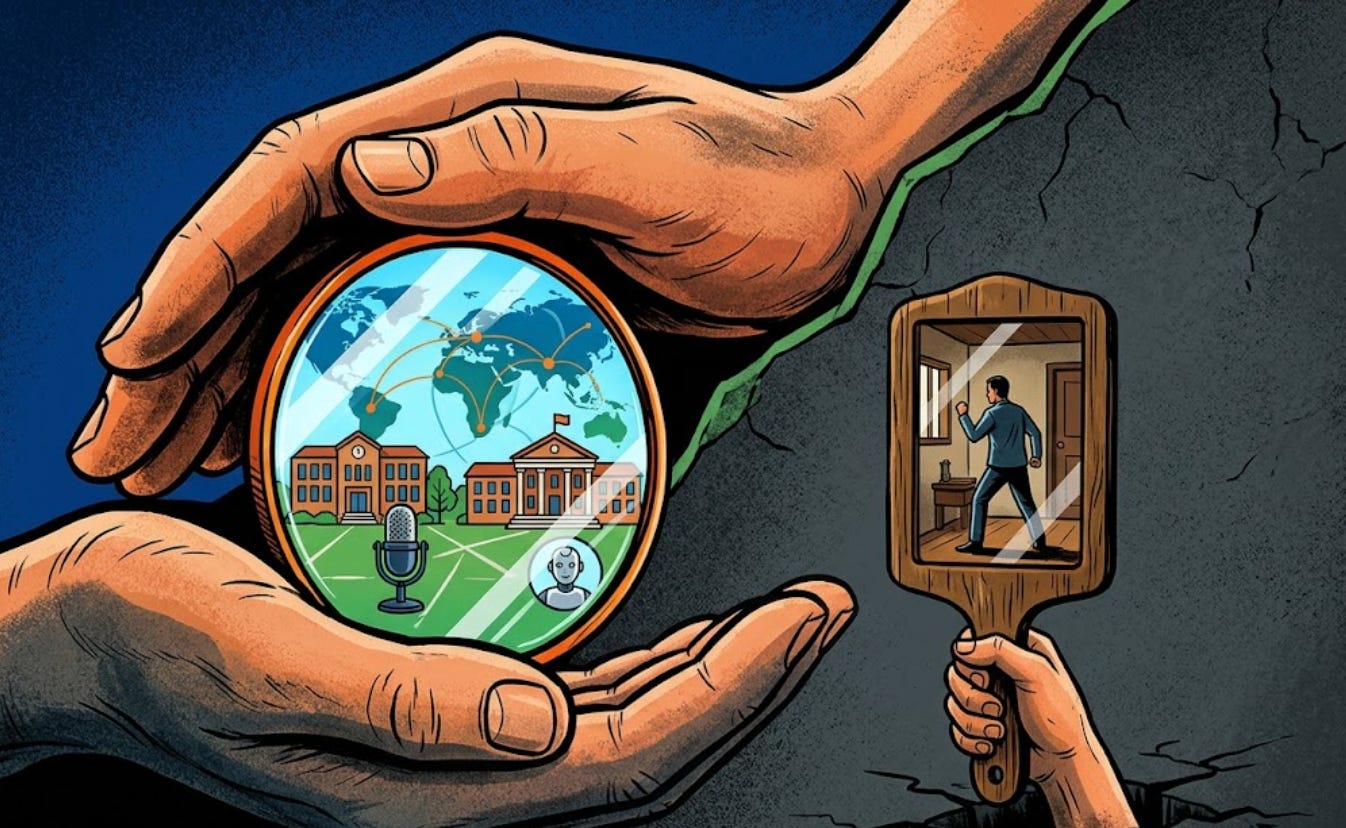
For Marc Andreessen - The people and environment he is surrounded by is the introspection. He has externalised the introspection. They are the mirrors and he is exposed to massive amount of reinforcement and lessons that he can use to guide his journey.
People can be driven by the pain of their past or from something.
This is actually a pattern of some of the great founders in history who came from and had difficult families and starts in life.
This includes people like Steve Jobs, Elon Musk, Genghis Khan and many many more. Becoming successful helped to fill a void - because they had something to prove.
This is wound-driven ambition.
And they’d rather not introspect for fear of losing that edge and drive. For them, they already have that make up, and the pain that drives them, and introspection might cost some people their edge
If these people wanted to be happier and resolve underlying psychological issues they could introspect, but it might mean they lose their edge.
But what if you don’t have that pain? You have to find something else, and that is the introspection.
Rather than finding pain, find these pain equivalents that generate similar energy without the damage:
Urgency - mortality awareness. You have finite time. That’s real, not manufactured. Memento mori is one of the oldest drive tools in history
Injustice - find something in the world that genuinely angers you and build against it
Responsibility - people depending on you generates similar neurochemistry to survival drive without the wound
Competition - a worthy rival activates the same chemicals as threat
Meaningful stakes - attach your work to something larger than yourself
But there is also wholeness-driven ambition.
Not all great ambition comes from wounds. Warren Buffett has spoken about genuinely loving what he does - he famously says he "tap dances to work."
Satya Nadella transformed Microsoft not through ego or hunger but through empathy and inner security. These are people driven not by what they lack but by what they are. Their ambition comes from full expression of their capabilities rather than compensation for their pain.
They move toward something rather than away from something. And crucially - they can stop. Wound-driven people almost never can. This is wholeness-driven ambition, and it may be the most sustainable fuel there is.
There is an argument to say that you might not need to "find pain" and not "be at peace" but be so fully yourself that not moving forward feels like the real loss.
Or you can learn to use all these parts to drive you forward. Find the pain or manufacture it.
A taxi driver in Dubai recently asked me how he can be successful. He’s considering launching a business. For him, and most people around the world, he’s obviously hit a wall, and no amount of working hard is going to solve it.
Like many people around the world, he has to look inside.
For most people having an elite level of understanding about themselves, their strengths, is absolutely necessary. If they don’t have a fire from their background and something to prove.
For most people, no one is handing them a world-class mirror. No brilliant co-founder challenging their thinking, no board of directors holding them accountable, no ecosystem of elite peers raising their standards daily.
If you're that taxi driver in Dubai - or the millions like him - introspection isn't a luxury or a therapy exercise. It's the only feedback loop you've got.