
A nation's economic success isn't measured by the performance of any single industry, but by its ability to unleash the productive potential of its people. The key to a dynamic economy lies in how we structure its foundational services.
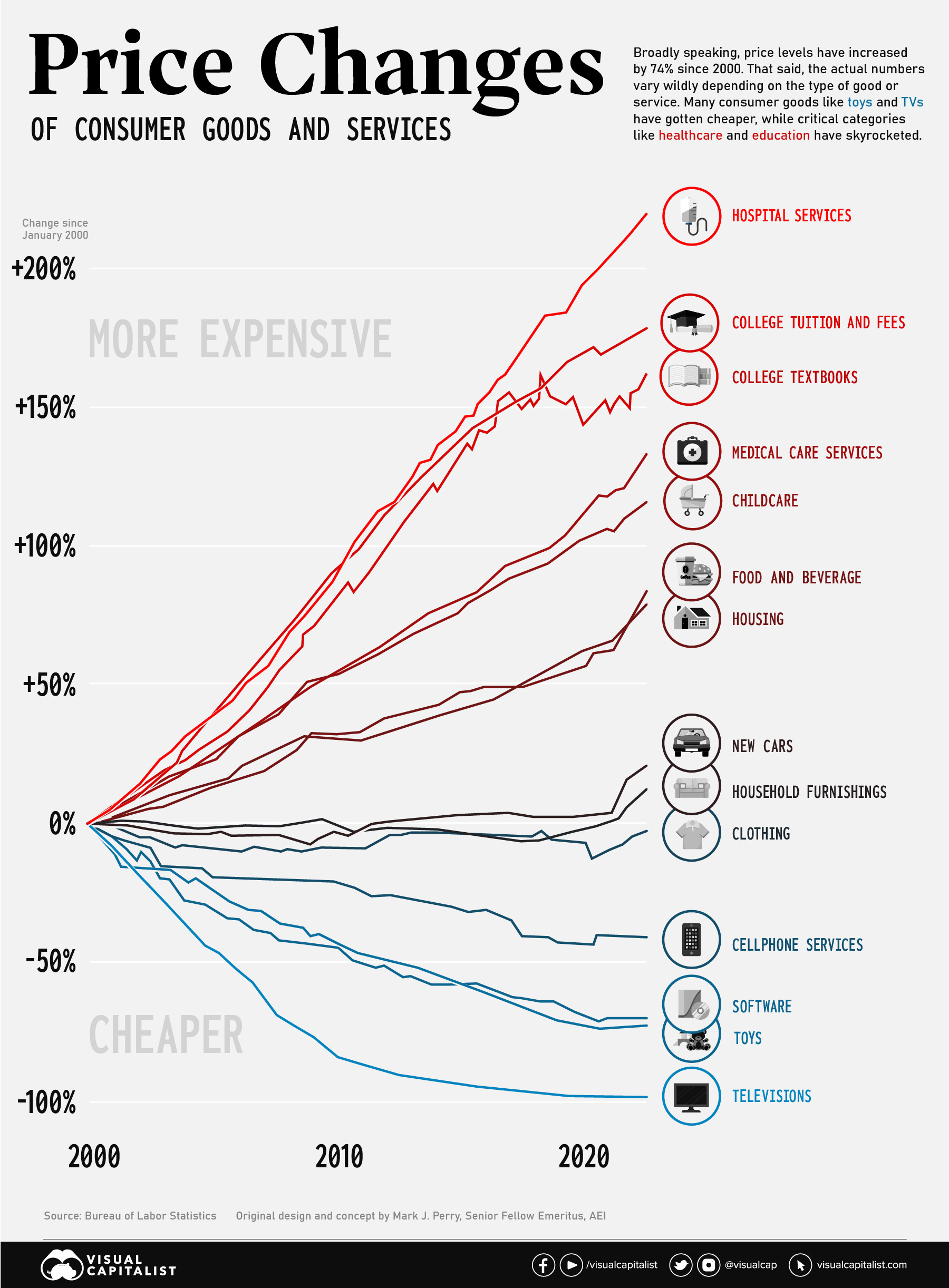
Think of the economy as having two distinct layers. The first is the platform layer: this is the essential infrastructure everyone needs to function, work, and innovate.
The second is the market layer: this is the world of consumer goods, technology, and competitive services where innovation, choice, and efficiency can flourish.
Infastructure is defined as
the basic physical and organizational structures and facilities (e.g. buildings, roads, power supplies) needed for the operation of a society or enterprise.
The core economic mistake of the last few decades has been to treat the platform layer like the dynamic layer, letting it become a primary source of profit maximization, but only been semi-privatising it, such as housing, where planning restrictions limits supply, and energy.
It is like handing over roads to private companies and allowing them to put up tolls on a road. People will travel less, and it slows the economy down. This creates a blackhole that drains the rest of the economy.
The solution is that we need to fix the platform layer which has huge positive benefits for the economy. Instead of maximising profit, we should subsidise or invest to maximise the consumer surplus - the difference between the price you are willing to pay, and what you do pay.
Let's see how this works with a practical example.
Consider a software engineer earning a solid salary, say $150,000 a year.
In Economy A, the platform is incredibly expensive. Her rent or mortgage consumes 40% of her income. Her family's health insurance premiums and out-of-pocket costs are astronomical. Saving for her children’s college education feels like funding a major corporation. After covering these basics, her high salary feels surprisingly small. She has very little discretionary income left to spend, save, or invest. Her economic power is effectively trapped, spent simply to secure her place on the platform.
Now, let’s imagine Economy B. Here, the society has made a strategic decision to treat the platform as what it is: essential infrastructure. Housing is managed to be affordable, healthcare is a predictable and manageable expense, and higher education doesn't require a lifetime of debt. Our engineer earns the same $150,000 salary.
The difference is transformative.
With her platform costs low and stable, a huge portion of her income is now freed up. This surplus doesn't just sit there; it ignites the dynamic layer of the economy in a positive feedback loop:
She buys a new EV, supporting innovation in manufacturing and sustainable energy.
She invests a portion of her savings in a promising tech startup, directly fueling research and development.
She spends more at local restaurants, shops, and entertainment venues, driving small business growth in her community.
She can afford to buy the latest consumer electronics—products that are constantly getting better and cheaper thanks to fierce competition in the dynamic market.
Not only does this allow her more resources, it frees up her mind to think bigger and perform better and to expand.
The conclusion is simple. The most effective strategy for widespread prosperity is to stop trying to squeeze maximum profit from the foundational platform. The goal for healthcare, housing, and education should be to deliver them at the highest quality for the lowest possible cost.
Doing so creates a massive economic dividend. By minimizing the cost of entry to a productive life, we maximize the amount of capital, talent, and demand that can flow into the dynamic, innovative sectors of the economy. An affordable platform is the launchpad for a thriving, inventive, and genuinely wealthy society.
