
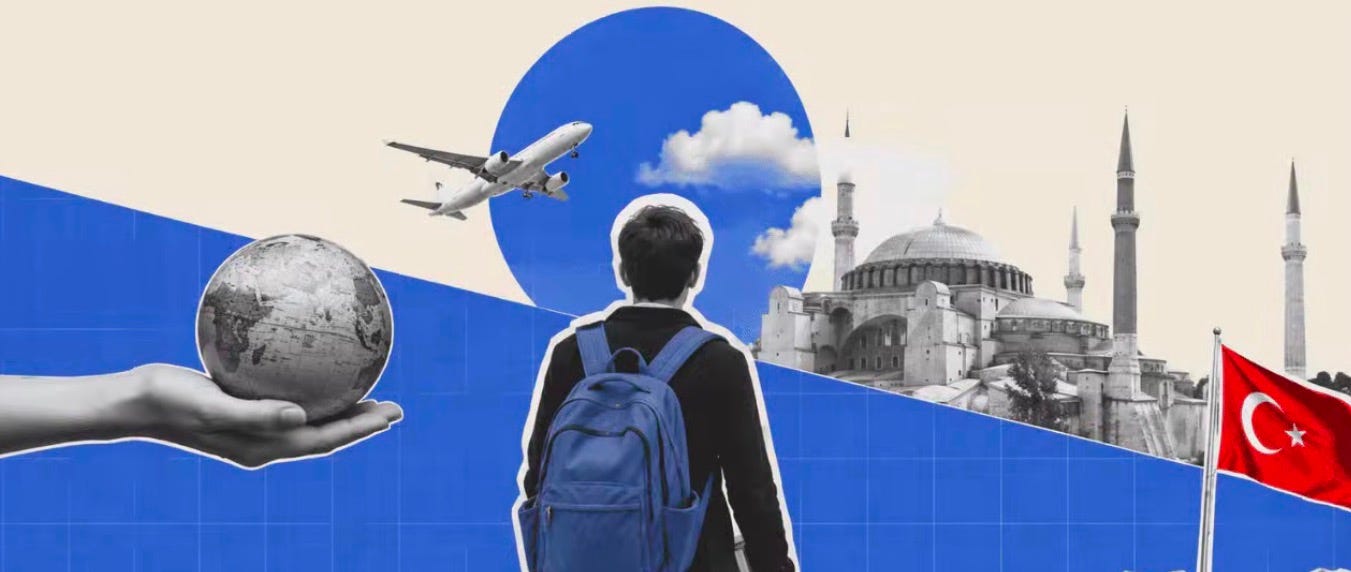
“The winds are changing in Türkiye” - were the words of one Turkish university admissions team.
Türkiye has set an ambitious target to grow international students to 500,000 by 2028, with the potential for it to exceed 1 million in the future.
International students are a key contributor to Turkish economy contributing over $3 billion to the economy with over 360,000 students now. Which reflects a trend worldwide of countries seeking to attract more long term residents such as nomadic visas.
Türkiye is a growing regional hub that students are choosing over other destionations in the middle east. Iran has previously had over 60,000 international students.
Turkiye also has cultural Turkic links with students in Uzbekistan and Kazakhstan who have previously been choosing Russia.
More about studying in Turkiye
International Student Trends in China
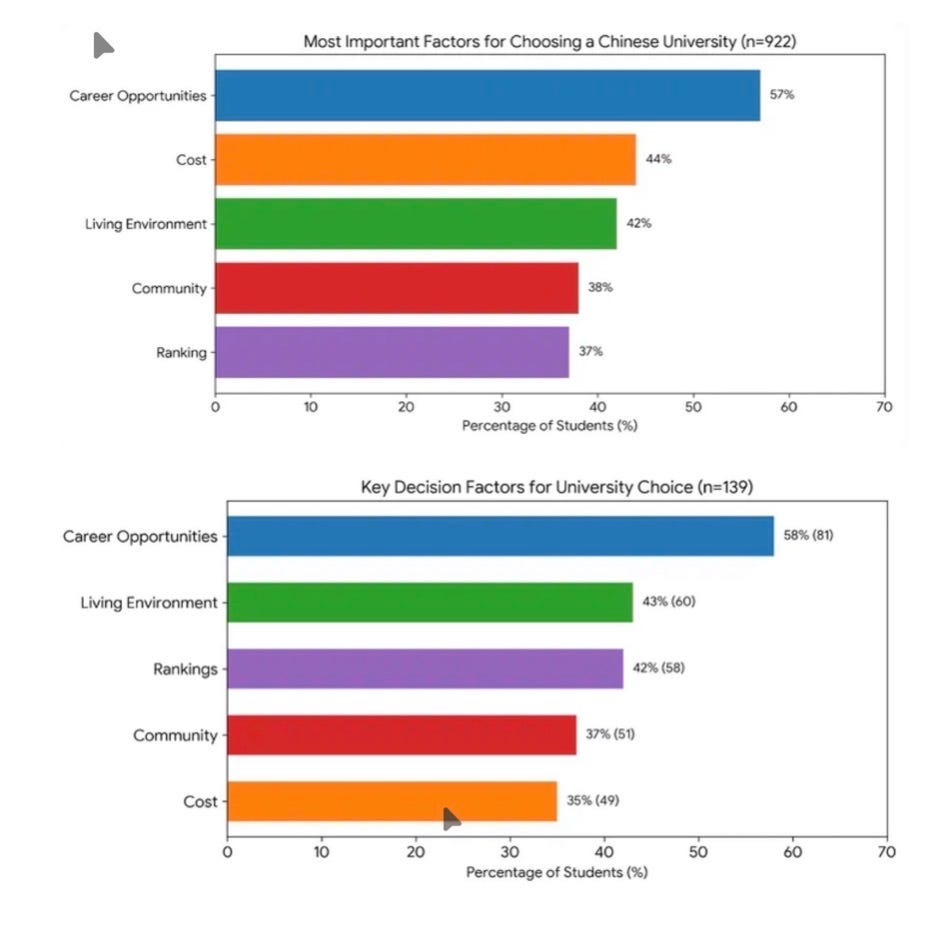
International Students in China are prioritizing career opportunities - we asked 950+ students choosing China what and career opportunities were the most important factor in where to study, which was slightly higher with those with the highest budget.
Interestingly the majority of the international students also say that they are looking at other countries and this actually increases as they continue to later stages of the recruitment funnel.
The report is here.
Invisible Students
One thing I’ve noticed is that different results and reports I’ve seen in the international education industry tend to give quite different perspectives which often conflict with what I’m seeing.
Agent led surveys usually give one perspective - perhaps focusing more on countries that pay the most commission and missing out on students who are applying by themselves to other destinations.
Rankings companies might say that rankings are the most important part in how people choose a university. This isn’t just a hidden incentive but that they attract the kind of student who does care the most about rankings.
It’s like seeing they are measuring different parts of the elephant as the Indian proverb goes. One person who sees the trunk might say it’s a snake, one who sees the leg might say it’s a tree trunk, and the ear is quite different.
The entire study abroad market is not one market and is made of many smaller markets.
What I’m seeing is that students are increasingly invisible to universities, and there is a continual increase in ghost applications. Students who are doing all the research themselves and then appearing as a completed application, or not appearing at all and applying elsewhere.
This is because more tools are available for them, and they are often less likely to reach out.
This is why I think creating additional touch points like online webinars, online micro-courses, short term programs, to bridge the gap and carrying out interview research can help to see beyond the data to get a more full picture.