
Why Chinese Universities Are The Heart of China's Future Economy
The importance of China's universities and what we can learn from this.
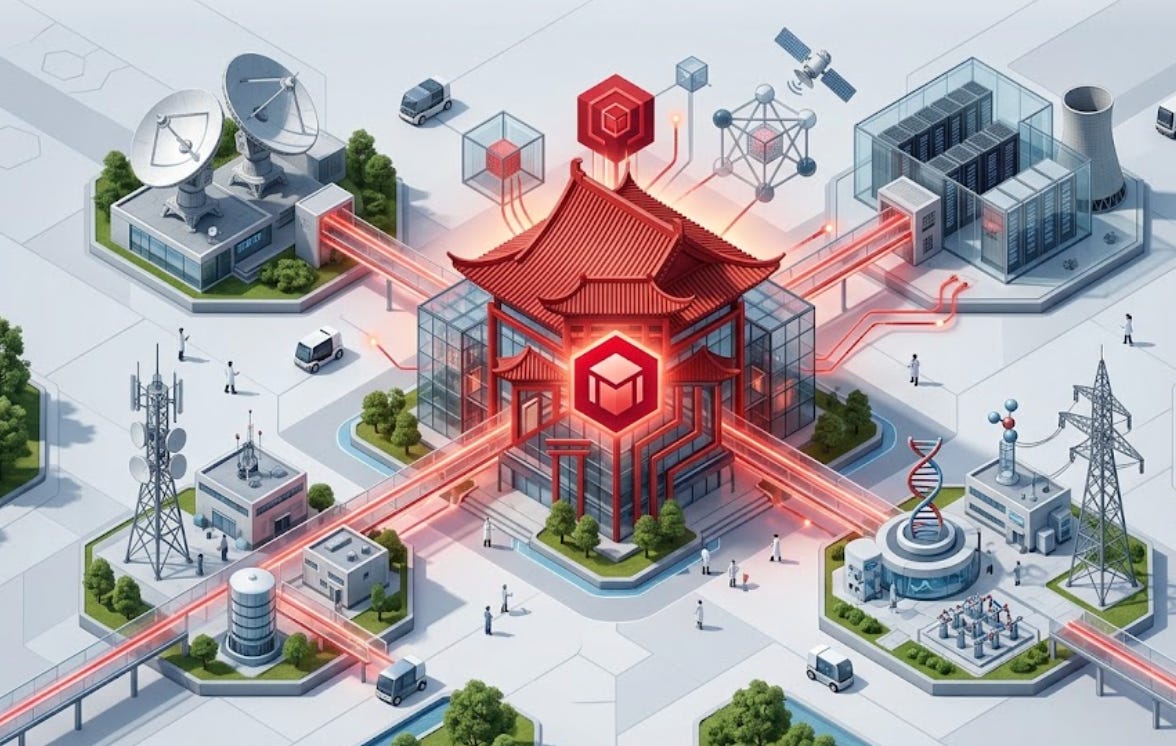
In the West, we can’t agree on what a university is for.
Is it a public good - something the state should fund because an educated population is infrastructure, like roads or clean water? Or is it a private good - a service purchased by an individual to increase their own future earnings, priced accordingly, and left to compete in something like a market?
Britain has spent thirty years oscillating between these two answers without ever picking one. Tuition fees went up, then got capped, then got debated again. American state schools drifted from land-grant public mission toward tuition-dependent quasi-private operation, while a handful of endowment-rich private universities behave more like sovereign wealth funds with a teaching arm attached.
Nobody has settled the argument, because the argument assumes universities are, fundamentally, in the business of educating individuals - and the debate is over who should pay for that.
China never entered the debate. Not because it resolved the philosophical question, but because it never accepted the premise. In China, the university isn’t a service provided to individuals. It’s core infrastructure, of China’s Platform State - positioned inside the industrial base the same way a power grid or a rail network is - and infrastructure doesn’t get a public-versus-private debate, because nobody argues about whether the electricity grid should be optional.

What “infrastructure” actually means here
Walk the geography and the claim becomes literal. Zhejiang University sits in direct working proximity to Alibaba’s DAMO Academy - the company’s core research arm for AI and chips- with faculty and joint labs moving between the two as a matter of course, not exception.
In Shenzhen, campus labs feed straight into the Huaqiangbei electronics market, the largest of its kind in the world, where a prototype can go from CAD file to physical object faster than a Western team can get a vendor to quote. Beijing’s E-Town innovation zone, Shanghai’s Zhangjiang Science City with its semiconductor and biotech clusters - these are not metaphors for “innovation ecosystems.” They are physical arrangements: the campus, the lab, the market, and the company standing close enough together that the boundaries between them stop mattering operationally, even if they still exist on paper.
In the West, the pipeline from research to product runs through a series of institutional handoffs - publish the paper, file the patent, find the tech transfer office, pitch the VC, spin out the company -each one a separate negotiation with its own incentives and its own delay. In China, large parts of that pipeline have been architecturally compressed.
The professor who also sits on a company’s technical board isn’t viewed with the institutional suspicion a Western tenure committee might apply. Proximity to industry is a credential, not a conflict.
A lab funded by commercial partners gets fed real production problems instead of hypothetical ones, and the distance between an efficiency gain on a whiteboard and that gain shipping in a product can be measured in the same building, sometimes the same person.
Why the debate can’t exist here
You can’t have a serious public-versus-private argument about a piece of infrastructure that the state has already decided it needs, at scale, faster than the market alone would produce it. Nobody in China is asking whether university R&D capacity should be rationed by ability to pay, because the strategic calculation was made upstream of that question: closing the university-industry gap is national policy, not a value someone gets to opt out of funding.
The debate that consumes Western higher education - access, affordability, the return on an individual’s investment - is a debate about a good.
China’s arrangement is a debate about a grid, and grids get built.
This has consequences beyond ideology. It means the earliest, most reliable signal for where China’s technology is actually heading doesn’t sit in corporate roadmaps or product announcements - it sits inside university labs that are already commercially entangled with the companies everyone else is watching.
The incubators, the joint research centres, the professor quietly running a Series A company on the side. By the time a capability shows up in a Huawei keynote or a DJI product line, it’s often been alive in a lab down the road for a year or two already.
Why this matters
If you work in education policy, this is worth sitting with regardless of whether you think China’s model is desirable: it demonstrates what happens when a society stops treating the university as a contested resource and starts treating it as committed capacity.
Whatever you think of the trade-offs - the Chinese model is at minimum a working counter-example to the assumption that public-versus-private is the only axis worth arguing about.
And if you’re trying to understand where Chinese technology is actually going, rather than where its press releases say it’s going, the practical implication is simpler: don’t just visit the company. Visit the lab next to it and the university. The company shows you the output. The university shows you the mechanism - and in China, increasingly, the two were never really separable to begin with.
This is what we are managing with the China tech tour of China Admissions.