
Emergence is the idea that something new and unexpected arises from simpler parts coming together - and the new thing has properties that none of the individual parts have on their own.
Everything is basically emergence
Humans ourselves are emergence
Families are emergence
Businesses are emergence
What we create and our output is emergence.
If everything is basically emergence, then it’s essential to curate your inputs.

Because that is what our creation is made of.
So how do we find the best inputs that will create what we want to create?
Seek the best music, art, literature, people, places.
Reduce the average / noise.
Go broad, then go deep.
BROAD
Going broad helps to establish a wide range of knowledge..

Here’s a list:
Top 5 Best Book of All Time
Meditations – Marcus Aurelius
Don Quixote – Cervantes
War and Peace – Tolstoy
One Hundred Years of Solitude – García Márquez
The Brothers Karamazov – Dostoevsky
Bible
Top 5 Best Music
Bach – Goldberg Variations
Beethoven – Symphony No. 9
Miles Davis – Kind of Blue
The Beatles – Sgt. Pepper’s Lonely Hearts Club Band
Bob Dylan – Highway 61 Revisited
Top 5 Best Art Pieces
The Starry Night – Van Gogh
The Sistine Chapel Ceiling – Michelangelo
Las Meninas – Velázquez
The Persistence of Memory – Dalí
Girl with a Pearl Earring – Vermeer
Top 5 Most Beautiful and Diverse Location
Kyoto, Japan
Patagonia, Argentina/Chile
Marrakech, Morocco
The Norwegian Fjords
Varanasi, India
Top 5 Most Distinguished People
Leonardo da Vinci (the ultimate polymath)
Marcus Aurelius (philosopher-king)
Nikola Tesla (visionary inventor)
Marie Curie (pioneering scientist)
Rumi (poet & mystic)
🏛️ Architecture & Space The environments you inhabit shape your thinking. Studying great spaces (Sagrada Família, Pantheon, Japanese gardens) trains your aesthetic sense.
🧪 Scientific Ideas & Discoveries Evolution, relativity, quantum mechanics -understanding how reality works fuels original thinking.
📜 Essays & Long-form Writing Montaigne, George Orwell, David Foster Wallace. The essay is where the sharpest minds think out loud.
🎭 Theatre & Performance Shakespeare, Greek tragedy, stand-up comedy. Live performance teaches rhythm, tension, and emotional truth.
🌿 Nature & the Natural World Forests, oceans, mountains. Nature is the original emergence - spending time in it recalibrates your nervous system and perspective.
💬 Conversations & Mentors Arguably the highest-bandwidth input. One great conversation can outweigh 10 books.
🧘 Contemplative Practices Meditation, journaling, prayer, stillness. These aren’t just habits - they’re how you process all the other inputs into something original.
🏺 Ancient Civilizations & History Greece, Rome, Egypt, China, the Ottomans. History gives you pattern recognition that nothing else can.
Most influential battles in history.
Marathon (490 BC) – Greece repels Persia; Western civilization survives
Thermopylae (480 BC) – Defined sacrifice, courage, and resistance forever
Hastings (1066) – Reshaped England and European power entirely
Waterloo (1815) – Ended Napoleon; redrew the modern world map
Stalingrad (1942) – Turned WWII; determined the 20th century’s fate
🏛️ Most Influential Empires Rome, Mongolia, Britain, Ottoman, Persian — each one a masterclass in how power, culture, and systems scale
⚖️ Most Influential Laws & Documents Magna Carta, US Constitution, Code of Hammurabi — the blueprints of civilization
💡 Most Influential Inventions The printing press, the wheel, the internet, gunpowder and how they came about
📣 Most Influential Speeches Lincoln, Churchill, MLK, Mandela - language used to move history
🕌 Most Influential Religions & Belief Systems Christianity, Islam, Buddhism, Stoicism, Hinduism - the operating systems of billions
💰 Most Influential Economic Events The Great Depression, the Industrial Revolution, Bretton Woods, the 2008 crash.
Study them, go deep to understand them, write about them, mimic them.
Study the turning points. Battles, ideas, inventions, moments where the trajectory of humanity bent. That's where the deepest signal lives.
🏙️ Most Influential Cities in History Athens, Rome, Baghdad, Florence, New York - cities that became crucibles of civilization.
🤝 Most Influential Social Movements Abolition, Suffrage, Civil Rights, Renaissance Humanism - when collective emergence reshapes society
🧭 Most Influential Explorers & Expeditions Columbus, Magellan, Ibn Battuta, Lewis & Clark - people who expanded the map of the known world
🖊️ Most Influential Propaganda & Persuasion How narratives have been weaponized - understanding this protects you and sharpens you
🧪 Most Influential Experiments Milgram, double-slit, Pavlov, the Manhattan Project - experiments that revealed something shocking about reality or human nature
DEEP
Actively design your own based on who you want to become or your specific goal.
The most influential speeches in history to understand human nature.
Implications
Studying the best of our current era is limited and incomplete because they are in the process of emerging and not the final product. So we need both.
The past and present also inform each other. When you’ve studied the greats deeply, you get much better at spotting them in your own era. You start to recognise the patterns - the seriousness, the originality, the disregard for fashion. The classics become a lens for the present, not just a replacement for it.
But it doesn’t need to be a commitment that takes away from your life. You can do a little each day. Read a bit of the greats each night. Study a passage in 10 minutes instead of social media.
Those will compound.
Here is one example
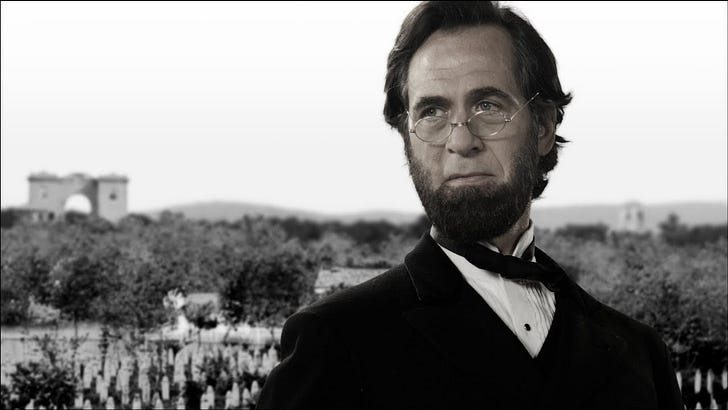
One thing that Abraham Lincoln did to become a great speaker was to write and rewrite passages and study the greats. That’s emergence and this process in action.
Lincoln taught himself to write by borrowing books he couldn't afford to own, copying out passages to keep them, then memorizing and reciting them aloud until the rhythm was inside him. By the time he sat down to write his own speeches, Shakespeare and the King James Bible were already in his bones.
The Superhuman Curriculum
I’ve also created another way of thinking about what we learn, which is more about taking the specific building blocks and putting them together. It answers the question of what specifically we should learn and study.
The Superhuman Curriculum

Everyone is asking whether AI is moving too fast. Whether we should pause, regulate, slow it down before it gets away from us. I understand the instinct. But it’s the wrong question. AI is not going to slow down - and the countries and people who wait for permission to adapt will simply be left behind. The real question is not how we slow the machine. I…
Is it true that CSC scholarship is not for English taught bachelor program, If I apply through Type A ?